Measures to eliminate poverty based on the development of technology for high-quality processing of flax fibers in the Fergana region and the production of composite ceramic materials based on them
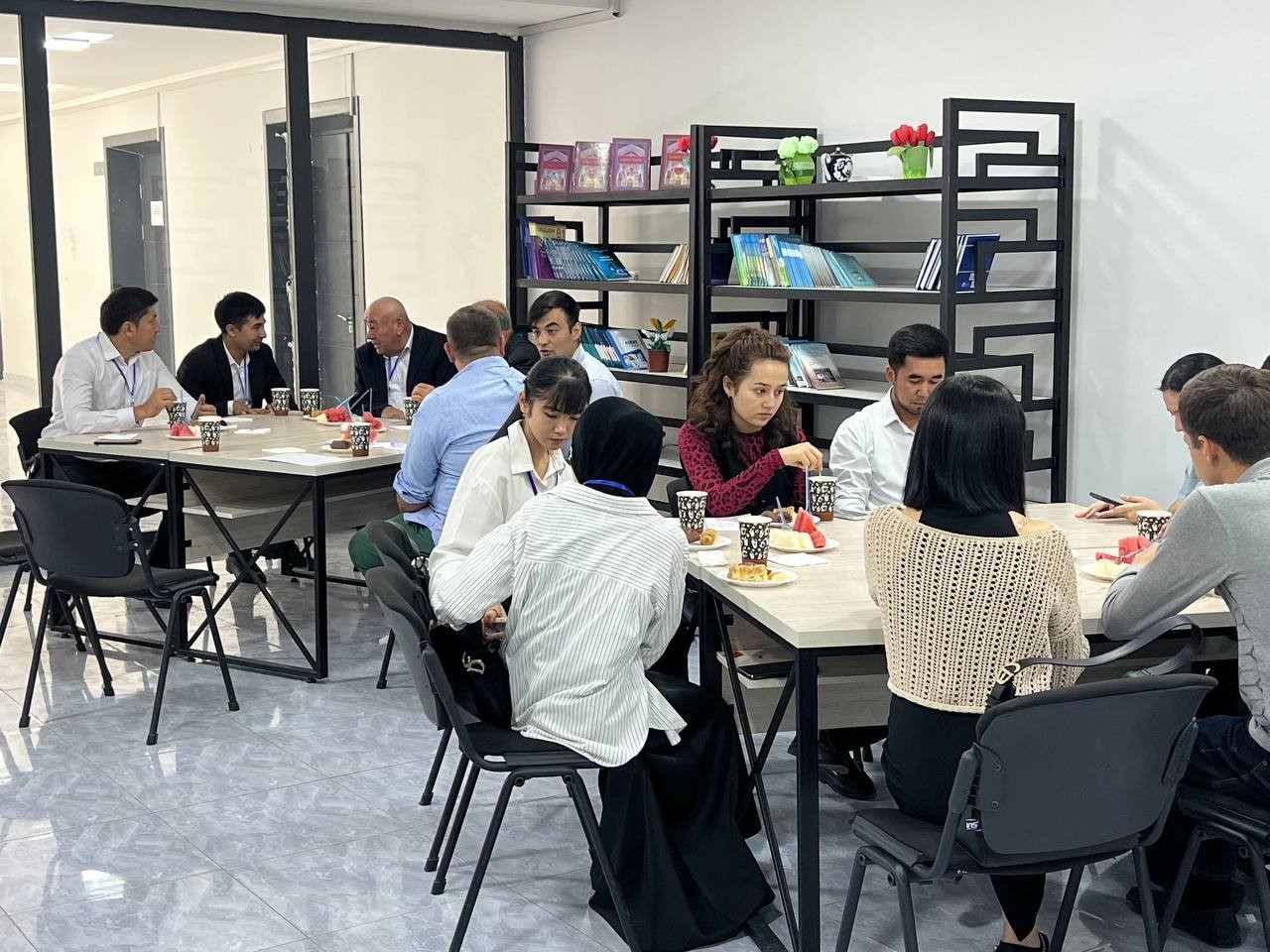
2025-09-24Today, on September 24, 2025, based on the agreement No. Cosoft 83478657 between the German Society for International Cooperation (GIZ) and Fergana State Technical University, the next steps of the international project worth 40,000 euros (568 million) on the topic of "Preliminary processing of flax plants in the Fergana region, development of technology for obtaining long and short fibers from it and production of national ceramic products with the addition of natural fiber waste" were taken, with the participation of the project leader M. Ubaydullaev and project members and the chairman of the invited seminar training - Rustam Komilov Makhammadovich and Prof. Dr. Manfred Stoll and Prof. Dr. Habil Jon H. Hanf, who visited the Hochschule Geienheim University of the Federal Republic of Germany, initially at Fergana State Technical University, a rural development workshop on the agrotechnology of growing fiber flax plants in the Fergana region and obtaining long and short fibers from it was held. A seminar training was held for economic specialists and young students in the field.
M.Ubaydullaev opened the seminar, greeted all those present, and introduced the invited local and foreign guests. He also provided brief information about the content of the seminar, which is being held within the framework of an international project, and the areas of cultivation in various regions of the Fergana region, where fiber flax is planned to be planted in the project, including the cities of Rishton, Kokand and the settlements of Bogistan.
After that, the project coordinator M.Uryshov gave a presentation in English to the invited foreign guests about the goals and objectives of the project.
Then, flax specialist Rustam Komilov Makhammadovich gave information in his presentation on the cultivation of water-saving plants and their adaptation to the climatic conditions of Uzbekistan, taking into account the water shortage in the world. In particular, he provided information about the fiber flax plant, which requires 50-55% less water and fertilizer than cotton in terms of water and fertilizer consumption and is ready for harvesting in 65-70 days. He also provided detailed information about the fact that the fibers obtained from the fiber flax plant differ from cotton fibers in length and strength, and that the clothes and various fabrics made from it have a positive effect on human health, and that the oils obtained from flax seeds have healing properties and have been used by mankind for daily needs since ancient times.
The seminar participants asked a number of questions about the adaptation of agricultural machinery used in the care of flax plants recommended for planting in different soil conditions, seed consumption and agrotechnology, as well as about the equipment for processing harvested flax stalks.
Expert R. Kamilov fully answered the questions in his presentation through picture slides and video clips.
At the end of the seminar, the project leader M. Ubaydullaev announced that financial agreements had been signed for the import of a special equipment for processing flax stalks and separating fiber from the stalks from China in the near future. He also mentioned that this equipment can be placed in the university laboratory and used to process flax plants grown on farms and obtain fibers from it, and he announced that the seminar trainings that were held will be held again during the project and that continuous information will be provided on the cultivation, harvesting and processing of fiber flax. After that, the participants of the seminar training were presented with souvenirs by the project members.
Author: Z.Z.Khamrakulov